The Venture Rush Into Physical Data
While frontier large language models scaled by scraping the open internet, embodied AI has slammed into a hard physical ceiling: no digital exhaust exists for real-world manipulation. This structural deficit has turned physical teleoperation data into the most fiercely contested bottleneck in machine learning infrastructure. XDOF, founded in 2024 by UC Berkeley roboticists Philipp Wu and Fred Shentu to capture real-world operational datasets for general-purpose robotics, is now finalizing a Series B round at an estimated $1.2 billion valuation led by 8VC.
The financing follows a $70 million Series A closed in June with backing from Thrive Capital, Andreessen Horowitz, Lux Capital, and Spark Capital. While management had not planned an immediate return to the fundraising circuit, a surging annualized revenue run-rate approaching $50 million triggered aggressive inbound term sheets from venture funds eager to secure exposure to the physical data pipeline.
Academic Origins and Global Operations
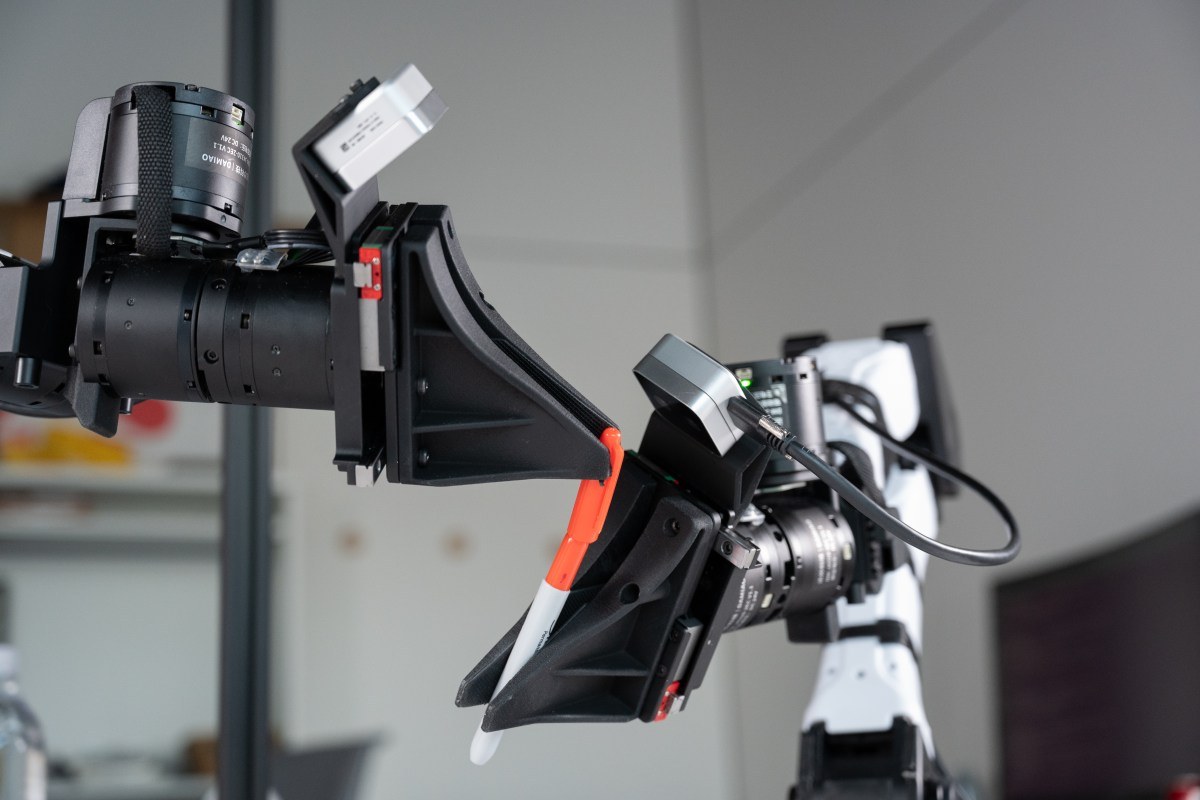
Wu encountered this structural constraint firsthand during his doctoral work on robot learning frameworks, where progress consistently stalled on the absence of large-scale physical demonstrations. That shortfall led him to partner with Shentu, now CTO, to engineer GELLO—an open-source, low-cost teleoperation interface enabling human operators to drive robotic manipulators and log ground-truth trajectory data.
"There simply was no large-scale manipulation data to work with."
Today, that research architecture forms the core of an outsourced data supply chain serving robotics developers and frontier foundation labs. XDOF captures movement data by combining teleoperated robotic arms with human workers equipped with wearable sensor rigs performing routine manual labor, including folding textiles and packing logistics containers. The operational model relies on expanding distributed human collection hubs globally, scaling physical teleoperators alongside egocentric sensor suites.
Dataset Scale and Market Competition
In collaboration with UC Berkeley's AI Research lab, XDOF is preparing the release of ABC, positioned as the largest high-fidelity robotic manipulation dataset compiled to date. Backers have begun marketing the company as the Scale AI of embodied autonomy.
Yet pricing an operationally heavy, human-dependent data collection network at software-grade multiples carries clear execution risks. Unlike synthetic simulation environments that scale with compute, physical collection remains tethered to human labor costs and hardware overhead. For enterprise buyers, high data procurement costs will inevitably pressure downstream unit economics, forcing automation roadmaps to justify steep initial data acquisition expenses against long-term operational efficiency.