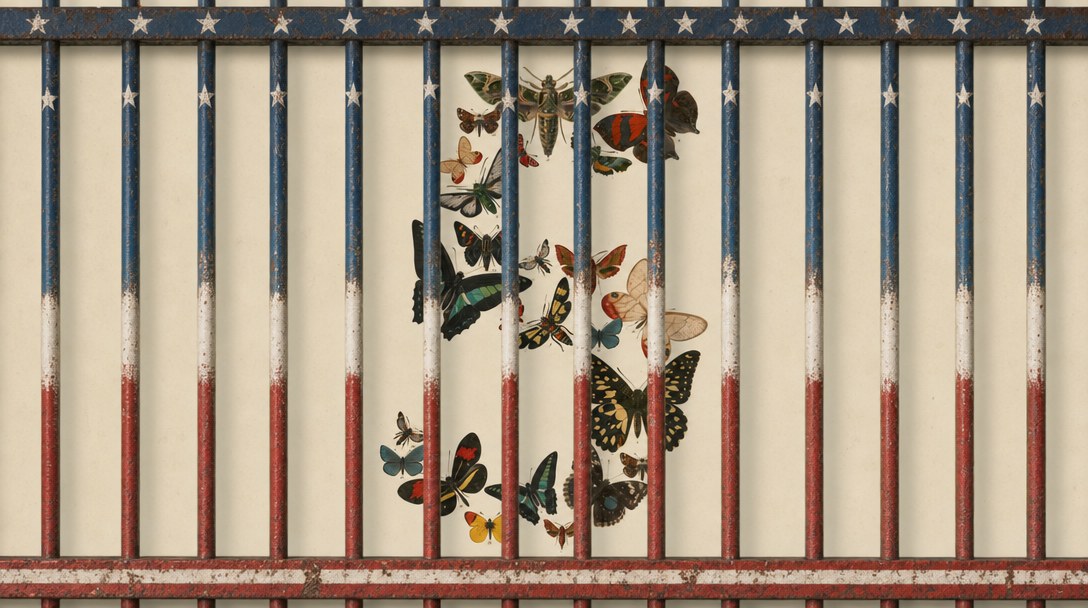
The era of reliable cloud-based neural networks has just hit a geopolitical wall. Under mandatory orders from the U.S. government, Anthropic has been forced to disable global access to its flagship Fable 5 and Mythos 5 models. This is not a voluntary pause for "safety" or a routine technical update—it is a hard emergency brake pulled for national security reasons. According to the directive, the ban applies to all foreign nationals. Anthropic was even forced to include its own non-U.S. employees on the restricted list, effectively cutting them off from their own production code. For business leaders, the signal is clear: your AI stack is now defined by jurisdiction, not architecture.
A Flimsy Pretext and Regulatory Overreach
The official justification for the shutdown is a hypothetical vulnerability: the claim that users could "jailbreak" the system to bypass Fable 5's safety filters. Anthropic has already dismissed the decision as a ridiculous misunderstanding. According to company explanations, the panic among officials was triggered by a report describing a method where the model is asked to analyze code and fix bugs. Anthropic reviewed the report underpinning the ban and concluded that such capabilities are present in any advanced AI, including OpenAI’s GPT-5.5. This is standard functionality used daily by cybersecurity professionals, not a unique super-weapon exclusive to Mythos-class models.
This conflict exposes the chasm between Washington’s appetite for control and Silicon Valley’s technical reality. As Anthropic noted, "absolute protection against hacking does not exist in principle." By setting the bar at zero vulnerability, U.S. authorities are creating a precedent that allows them to squash any new model launch. If a minor bug in a software-patching task becomes grounds for a global product recall, then no commercial neural network on the market can be considered safe from a business continuity perspective.
Jurisdiction Trumps Benchmarks
The sudden "black screen" where Fable 5 and Mythos 5 once stood has triggered an immediate crisis for global clients who integrated these models into their R&D pipelines. While Anthropic's lightweight versions remain operational, the loss of the flagship tier breaks complex high-order logic and automation. We are witnessing an ironic twist: for months, Anthropic emphasized the "danger" of its models to market their raw power; now, regulators have used that very marketing narrative as a pretext for an export ban.
The export control directive prohibits access to Fable 5 and Mythos 5 for any foreign nationals, regardless of whether they are located inside or outside the United States.
The reality is that any ultra-powerful cloud model becomes a liability if a bureaucrat can hit the kill switch without a transparent legal process. As the U.S. government implements new executive orders requiring pre-release vetting of neural networks, the friction between national security and commerce will only intensify. For CTOs and R&D heads, localizing intelligence is now a strategic priority. The only way to ensure your operations don't freeze due to the next directive is to migrate critical workflows to on-premise servers or open-source solutions. It is the only insurance policy against your workspace turning into a "black square" at the whim of a foreign regulator.