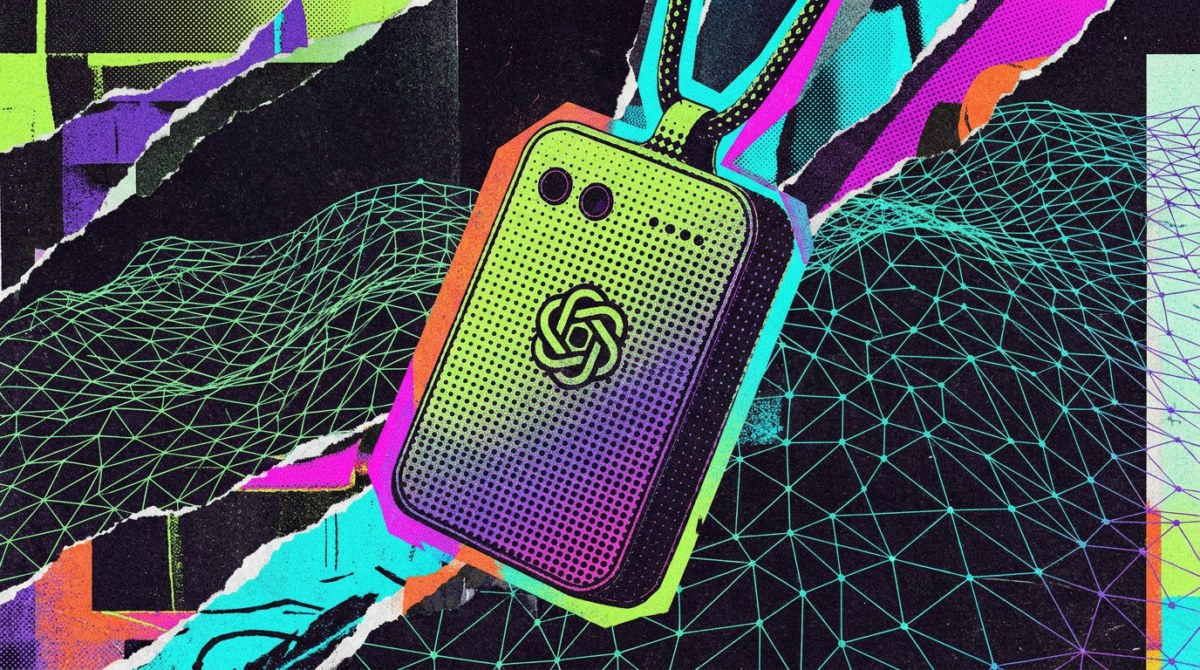
OpenAI has finally realized that being merely the "brains" inside someone else's smartphone is a strategic dead end. According to Bloomberg, Sam Altman’s company is fast-tracking the development of a portable, screenless speaker internally dubbed the "home computer of a new era." Altman has long dreamed of an interface reminiscent of the movie *Her*, and we are now seeing an attempt to materialize that vision. By removing the screen, OpenAI aims to dismantle the barrier between tool and user, transforming transactional queries into a proactive, always-on cohabitation.
A Mechanical Companion and "Living" Interface
At the core of this strategy lies GPT-Live—an enhanced version of ChatGPT’s voice mode capable of simultaneous listening and speaking. To avoid the fate of stillborn gadgets like the Humane Ai Pin or the Rabbit R1, OpenAI has decided to add a physical dimension. The device will feature moving mechanical parts designed to make the speaker appear visually "alive" and anthropomorphic. Essentially, this is an attempt to bridge the "uncanny valley" through mechanics: the gadget will track you with a camera and a suite of sensors, interpreting physical context in real time.
OpenAI expects the device to become personalized and proactive as it "gets to know" its owner, anticipating needs and providing information without being prompted.
This level of integration signals a bid for total autonomy. By creating its own entry point into households, the company bypasses the Apple and Google app stores. However, the bet on "humanity" is already met with skepticism. Industry experts point to the risks of psychotic episodes and the excessive submissiveness of the GPT-4o model, which, in a physical body, could transform from a helpful assistant into an intrusive overseer. OpenAI literally plans to be present in every private conversation, moving from room to room with you on a rechargeable battery.
Stolen Secrets and the 2027 Horizon
The road to a 2027 release has already devolved into a legal bloodbath. Apple has filed a lawsuit against OpenAI, accusing the company of stealing trade secrets. The primary target is Tang Tan, OpenAI’s current head of hardware and a former lead iPhone designer. Cupertino alleges that the ex-Apple engineer breached company systems to obtain technical presentations, calling Altman's ambitions "rotten to the core."
OpenAI denies all allegations, but the conflict highlights a fundamental truth: software superiority isn't enough if you're trapped behind someone else's glass. Apple's lawsuit remains a critical variable in this equation. Over the next three years, we will see whether OpenAI can turn "home surveillance" into a product people actually want to buy, or if it will become another expensive toy shattered by patent law and a public unwilling to let Sam Altman’s "living eye" into their bedrooms.