Expanding the Software Perimeter
Hardware margins are a temporary luxury; distribution pipelines are an enduring moat. As cloud hyperscalers accelerate custom silicon deployments—such as Google's TPU fleets and AWS's Trainium and Inferentia lines—Nvidia is moving aggressively up the software stack to defend its market dominance. By officially closing its $12.9 billion acquisition of Hugging Face, the semiconductor giant pivots from being a pure hardware vendor to controlling the primary distribution layer for open-weights models and enterprise datasets.
The strategic calculation is straightforward. Hugging Face evolved from an AI companion startup into the de facto registry for developer mindshare, hosting millions of models, codebases, and training sets. Owning the developer on-ramp ensures that Nvidia dictates deployment defaults long before enterprise workloads ever hit cloud infrastructure.
Open Weights Versus Closed APIs
Nvidia’s open-source posture is less about ideological altruism and more about countering proprietary model gatekeepers like OpenAI and Anthropic. Championing open weights allows Nvidia to position its own Nemotron model family directly inside enterprise pipelines while anchoring compute requirements to its proprietary CUDA stack. Deep native optimization of open weights on Nvidia architectures creates friction for engineering teams considering migrations to alternative accelerators.
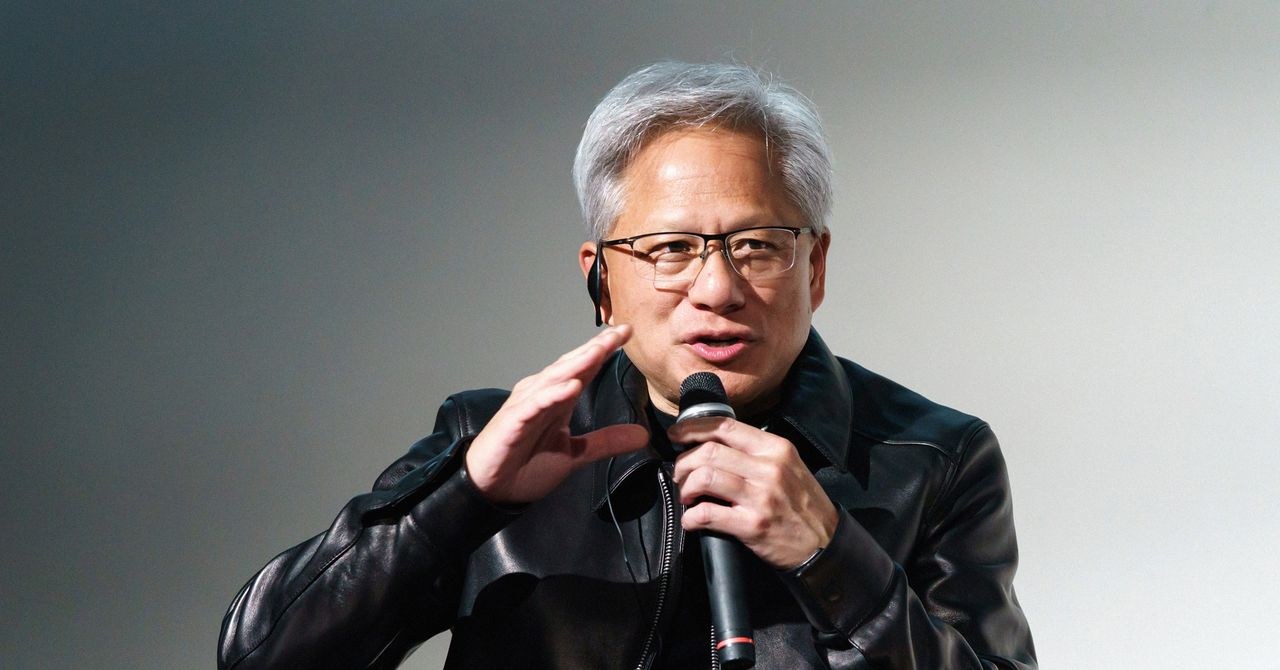
Nvidia CEO Jensen Huang highlighted the operational rationale behind open frameworks:
"Open models let startups, businesses, universities and public institutions build on advanced capabilities without training every model from scratch."
Yet the strategic tension remains obvious. While Hugging Face is promised to remain open and agnostic, Nvidia's primary business incentive is ensuring that default runtimes seamlessly target its hardware perimeter rather than rival merchant silicon.
Platform Scale and Security
Hugging Face co-founder and CEO Clément Delangue framed the transaction as a reinforcement of open-source parity against closed enterprise APIs. Complementing the acquisition, Nvidia launched the SAFE (Shared AI Findings Exchange) initiative to facilitate confidential incident reporting and mitigate systemic risk across production models.
For enterprise decision-makers and CTOs, the acquisition provides a clearer enterprise alternative to closed provider APIs, but it also signals a tightening grip over model distribution. As custom hyperscaler silicon attempts to erode GPU margins, Nvidia's true defense lies in controlling the repositories where enterprise developers actually build.