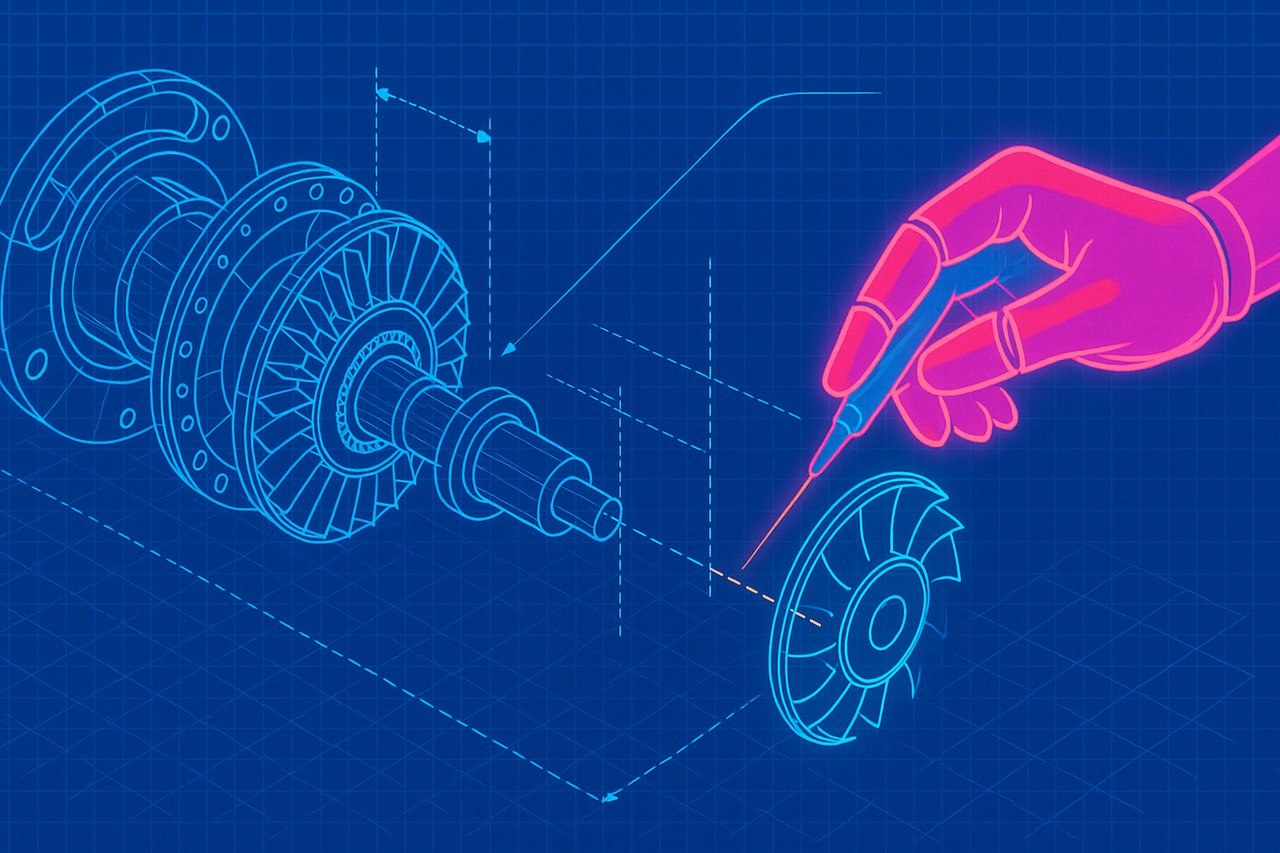
For decades, industrial design has been stalled by the technical disconnect between geometry and physics. According to researchers from Northwestern Polytechnical University (NPU) and the Shanghai AI Laboratory, the "semantic gap" between CAD (Computer-Aided Design) and CAE (Computer-Aided Engineering) remains a critical bottleneck. Engineers are currently forced to manually translate simulation results—such as stress fields and displacement metrics—into specific geometric adjustments. This workflow is frequently interrupted by system crashes, meshing errors, or solver non-convergence, turning optimization into a grueling manual search rather than a streamlined digital pipeline.
The COSMO-Agent (Closed-loop Optimization, Simulation, and Modeling Orchestration) system introduces a reinforcement learning (RL) architecture to fully automate this cycle. According to the developers' report, the system treats CAD model generation, CAE calculations, and result parsing as a single interactive environment where the language model acts as an active operator rather than a mere advisor. Instead of simply suggesting changes, COSMO-Agent iteratively generates parametric geometry, runs simulations, and updates parameters until all technical constraints are met. Thanks to a reward system that prioritizes toolchain stability and output validity, even small open-source models in this framework can outperform heavyweight proprietary solutions in efficiency and design feasibility.
The key shift here lies in the transition from an AI chatbot to an orchestrator of complex industrial software. Data shows that COSMO-Agent successfully manages 25 component categories, maintaining a revision history directly within the native CAD environment. For R&D departments, this offers a chance to eliminate human error from endless modeling cycles. The system treats software failures not as fatal errors requiring human intervention, but as environmental states to be processed within the reinforcement learning strategy.
Ultimately, the authors are attempting to replace engineering intuition with a stable geometry correction algorithm. While COSMO-Agent promises to bring order to computational chaos, it essentially asks us to trust design to a model that lacks a fundamental understanding of physics. As long as the simulation doesn't trigger an error, the agent considers the design a success—the very approach that created the verification problems we face today. The system's effectiveness in real-world manufacturing will depend not on the speed of iterations, but on the AI's ability to identify critical defects that lie outside the predefined simulation parameters.