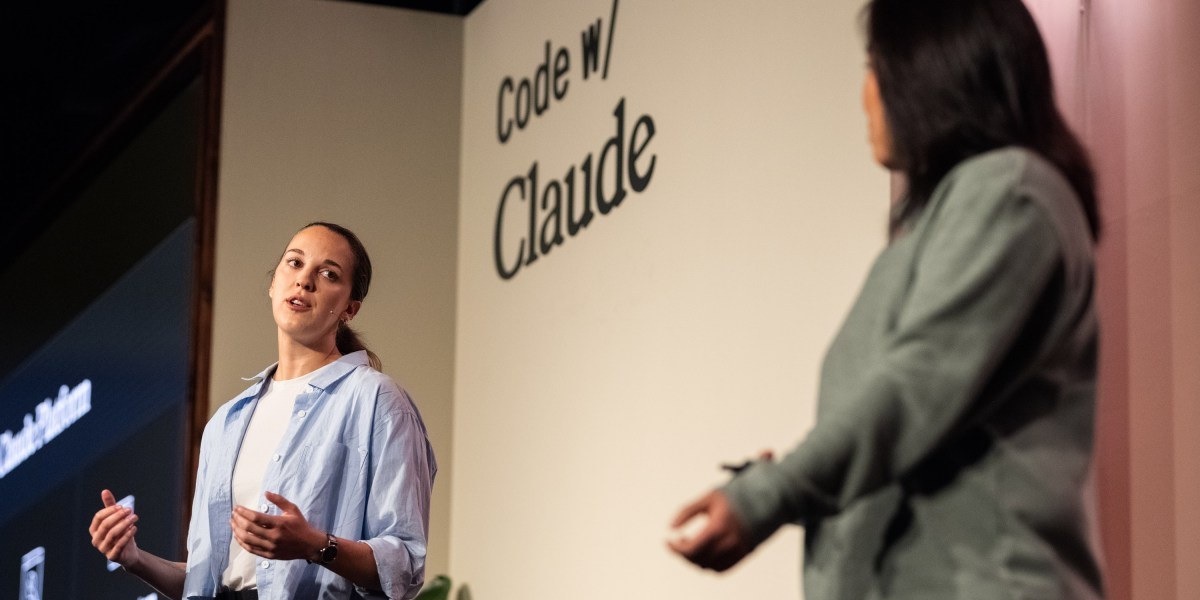
The era where humans served as the primary authors of software code is finaly giving way to a paradigm where machines define their own tasks. At a recent Anthropic event in London, engineer Jeremy Hadfield asked the audience a simple question: who in the last week has deployed a pull request written entirely by the Claude neural network? Nearly half the room raised their hands. What followed was more unsettling: when Hadfield asked who had approved those changes without even reading the code, most hands stayed up.
This shift from writing code to overseeing it is no longer a futuristic forecast; it is the operational standard at Anthropic itself. According to Hadfield, a significant portion of their software, including the Claude Code tool, is now generated by the AI. Anthropic is methodically positioning Claude Code not as just another chat assistant, but as an autonomous agent with command-line interface (CLI) access, capable of independently fixing bugs and closing tickets.
Boris Cherny, head of product development, states it plainly: the focus has shifted from the human crafting prompts for the model to the model generating its own prompts to reach a goal. To support this workflow, engineer Ravi Trivedi introduced a feature based on the 'let it cook' principle. The idea is simple yet radical: distance the developer from the stream of logs and errors as much as possible, delegating the iterative cycle of testing and refining code entirely to the machine. While Google uses its I/O conference to lure developers with new integrations, Anthropic is targeting the industry's biggest pain point—eliminating friction in the terminal.
However, behind this thirst for speed lies a critical gap between business metrics and the reality of system maintenance. We are witnessing a classic case of vendor lock-in, but one that exists at the level of development logic itself. If half the industry stops reading what it implements, it raises a haunting question: who will possess the fundamental knowledge to fix a system when an autonomous agent hallucinates in a critical node?
Saving on man-hours today could translate into catastrophic technical debt tomorrow. There is a real danger that in the future, the architectural integrity of projects will not only be impossible to maintain but impossible for any human to even comprehend.