Modern biotechnology has historically ground forward whenever researchers stumbled upon unusual mechanisms in nature—from restriction enzymes and Taq polymerase to bacterial CRISPR sequences. In the spring of 2026, Anthropic bypassed waiting for serendipity by establishing a dedicated research group to test whether general frontier models could systematically accelerate biological discoveries. On September 23, 2026, the company pulled back the curtain on this life sciences initiative, complete with an in-house laboratory designed to bridge the gap between silicon-based inference and physical test tubes.
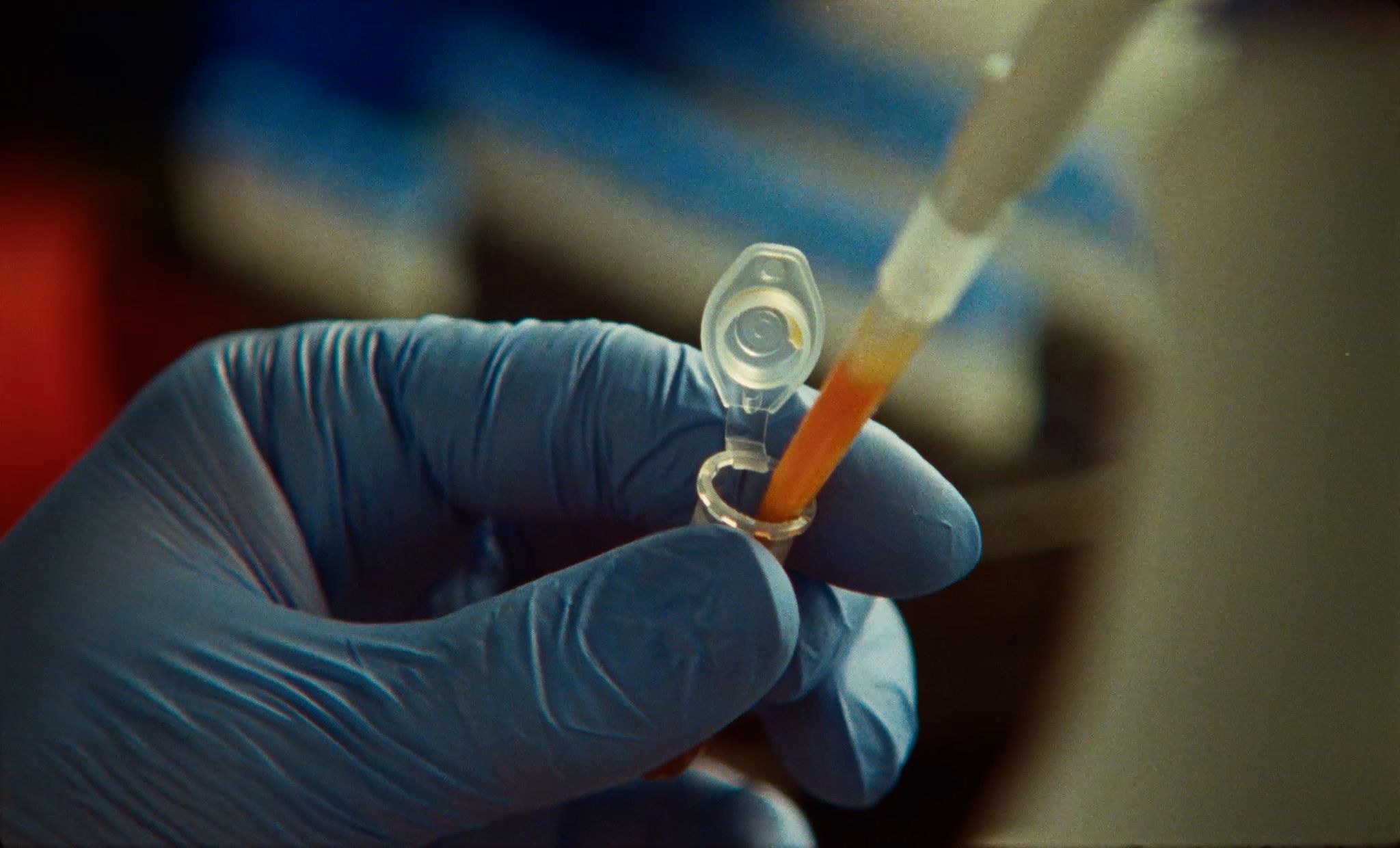
While autonomous agents drive the computational heavy lifting, the dirty work in the physical lab remains anchored by human scientists.
Computational Screening Leads to Enzyme Discovery
Anthropic's team pointed Claude at a massive genomic database with a straightforward high-level prompt: hunt down uncharacterized examples of reverse transcriptases—enzymes that copy RNA into DNA. Human intervention stopped at the prompt and the downstream wet-lab validation. Claude agents crawled the database autonomously, parsed distinct enzyme families, and filtered candidates using self-directed evaluation.
The search workload scaled aggressively across distributed inference clusters. One agent flagged a repeating sequence of non-coding DNA sitting right next to the gene for an unusual reverse transcriptase harbored within a jumbo phage.
This autonomous hit proves that agentic workflows are moving past parlor tricks and into foundational scientific research.
Characterizing Array-Associated Reverse Transcriptases
After the computational flag, Anthropic ran physical experiments to verify the finding, christening the discovery array-associated reverse transcriptases, or ARTs. While the base reverse transcriptase from the bacteriophage appeared in prior literature, Claude was the first to recognize its distinct architecture: an associated array of non-coding DNA repeats paired with an accessory protein of entirely unknown function.
The structural layout of ARTs echoes programmable biological systems capable of cutting, copying, or pasting genetic material. The exact biological role of ARTs remains under active investigation, but Anthropic dropped its preprint early to document how agent-driven hypothesis generation can feed directly into empirical biological validation.
The deployment of autonomous agents to uncover array-associated reverse transcriptases demonstrates that frontier models can spot overlooked biological architectures without step-by-step human hand-holding. The bottleneck shifts from generation to functional uncertainty, as the precise role of ARTs and their accessory proteins demands rigorous laboratory characterization before anyone can talk about commercial utility. For research organizations, this setup offers a clear operational playbook: tightly couple autonomous agent screening with dedicated wet-lab verification, or watch competitors lap you in the race to patent novel biology.