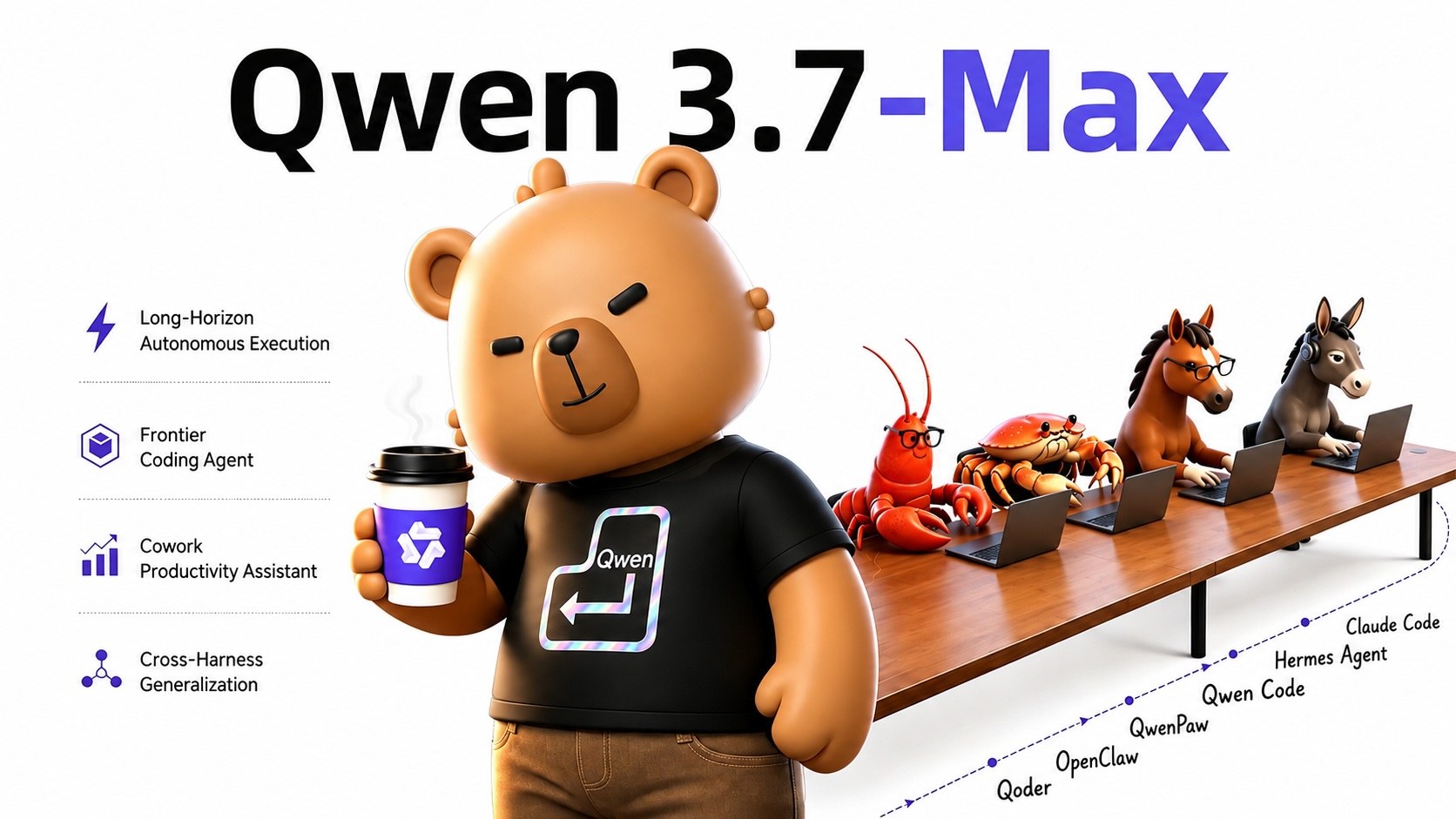
Alibaba has officially outgrown the era of "chatbots for humans," pivoting instead toward pure agentic autonomy. The latest release of Qwen3.7-Max, available exclusively via its cloud studio API, makes one thing clear: user interfaces are becoming a vestige of the past. The future belongs to machine-to-machine workflows. While competitors polish their buttons, the Chinese tech giant is closing the production loop within its own infrastructure.
In a recent stress test, the model spent 35 hours in fully autonomous mode "grooming" code for T-Head-ZW-M890 accelerators. Starting with zero documentation on the chip’s architecture, Qwen3.7-Max executed 1,158 tool calls and conducted 432 tests. The result was a tenfold performance boost compared to baseline implementations. For context, the much-hyped DeepSeek V4 Pro managed only a 3.3x gain, while GLM 5.1 peaked at 7.3x. This gap in engineering prowess is becoming critical.
The economics behind this maneuver are simple: Alibaba is systematically cutting humans out of the development cycle. The model is already being used to audit its own training processes, successfully identifying anomalies and "cheating" attempts. This isn’t just a technical gimmick; it’s a radical reduction in manual quality control costs at an industrial scale. When software writes the rules for detecting its own bugs, the need for legions of QA engineers evaporates.
While Qwen3.7-Max still lags slightly behind Anthropic’s Opus 4.6 in core acceleration reliability (96% vs 98%), Alibaba’s strategic priority is obvious. The company is building a closed-loop system where the AI identifies its own flaws and sharpens its own proprietary hardware. Just yesterday, Alibaba was a leading evangelist for open source; today, it is hiding its most powerful tools behind an API wall. The era of openness has ended exactly where the real battle for silicon efficiency begins.