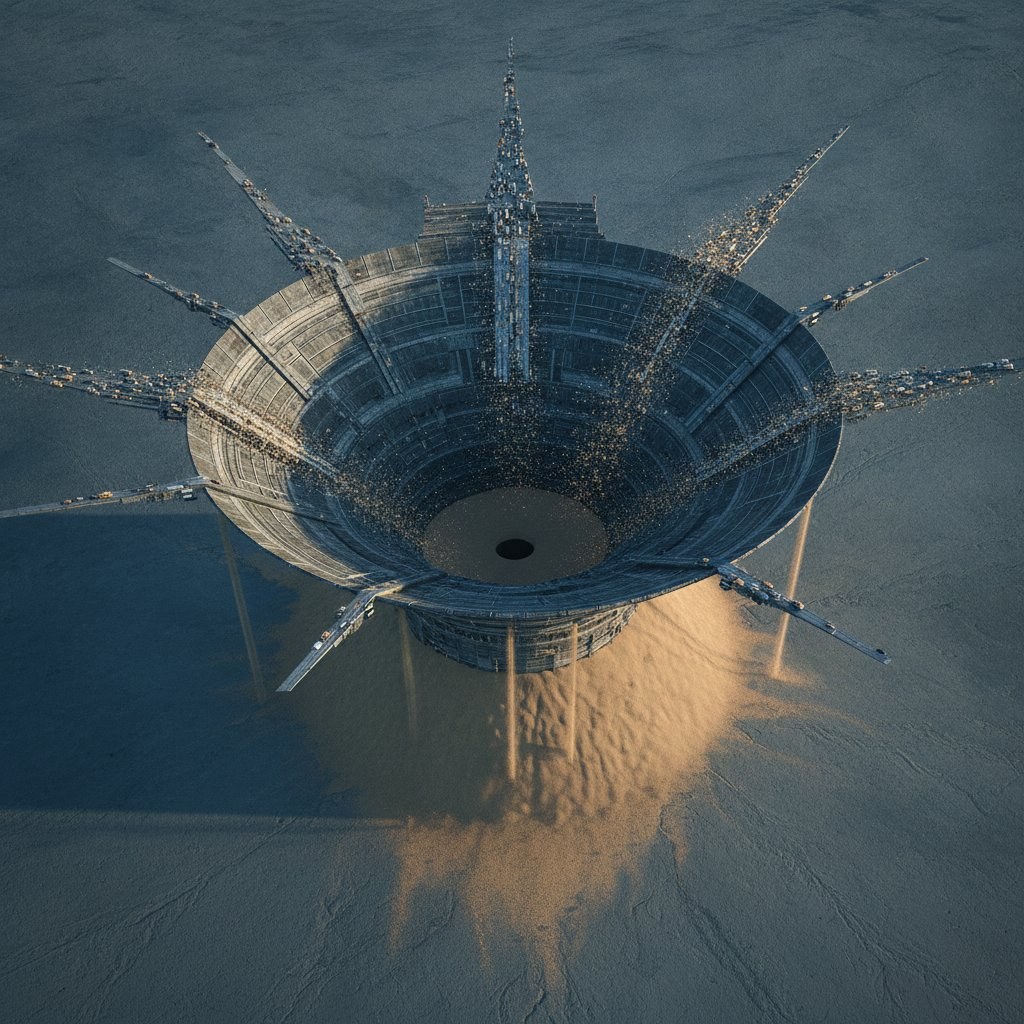
The economic contract that has sustained the open web for twenty years has been officially nullified. For a long time, the deal between search engines and content creators seemed fair: platforms captured the value of the search query, while websites monetized the resulting user click. A study by Qiaoni Shi, Kai Zhu, and Kai Gu from Bocconi University proves that AI search is unilaterally rewriting these rules, absorbing the information need directly within the intermediary interface. Using Comscore clickstream data from US desktop users, the researchers confirmed that ChatGPT is not an "improved Google," but a black hole for attention that finally uncouples content discovery from traffic.
The 5.2% Verdict: The Collapse of the Referral Model
The figures from the Bocconi University report read like an epitaph for digital publishers: only 5.2% of ChatGPT sessions end with a click-through to an external resource. By comparison, in the traditional Google model, the intermediary acted as a router, directing traffic to target sites to be converted into ad impressions or subscriptions. AI search operates differently. Through extraction and synthesis mechanisms, it "feeds" the user a ready-made answer before they even have a chance to consider the original source. As the researchers note, we are witnessing a paradigm shift from "routed visits" to "residual clicks." Visiting a creator's site is no longer the logical conclusion of a search, but an optional side effect.
AI search satisfies queries within the system, destroying the unspoken agreement that underpinned content production on the free internet.
This process is not merely a temporary dip in metrics, but a deliberate draining of information traffic. Analysis of expanded access to ChatGPT Search showed that the presence of AI tools reduces traditional search usage by 9.4%. Furthermore, the blow falls hardest on the most vulnerable—general information categories. For media managers and strategists, this marks the end of the "traffic for indexing" era. Platforms now simply consume your content as free fuel to ensure the user never leaves their cozy "walled garden."
Survival in Narrow Niches
However, not everyone is going extinct in this new economy. The study revealed a curious anomaly: the surviving "residual" clicks are not just a shrunken version of Google's flow. ChatGPT traffic is skewed toward highly specialized fields and complex databases, while general information sites relying on ad revenue are left in the cold. This hints at a future hierarchy: general knowledge is becoming a commodity absorbed by the model's interface, while only deep, authoritative, or transactional resources will retain their gravity. For everyone else, the threat is existential: links and citations in a chatbot's response may maintain the appearance of attribution, but they generate no ad impressions and build no brand equity.
This research captures a tectonic shift that demands a total rethink of monetization strategies. If only one in twenty sessions results in a click, the advertising model for general-interest media is officially dead. The question remains: how will publishers respond to their content being used for "answers" rather than "referrals"? Without incentives to create public content, the internet risks becoming a scorched field where AI endlessly rehashes its own old data. The zero-click era has become our new baseline reality.