Modern immuno-oncology is trapped in a paradox: while checkpoint inhibitors (CPIs) are successfully gaining regulatory approval, they only benefit a small fraction of patients in practice. Most patients remain unresponsive due to resistance mechanisms that standard preclinical models simply fail to capture. This represents a classic disconnect between theory and practice: attempting to digitize biological "noise" without proper context inevitably leads to clinical trial failures.
In a recent publication in Nature Machine Intelligence, researchers introduced MIDAS—a multimodal graph neural network. Its key differentiator is the ability to ignore false correlations and focus on the architecture of the tumor microenvironment. MIDAS succeeds where traditional data analysis methods falter by integrating gene interactions, multi-omic profiles, and the phenotypic consequences of genetic changes to identify critical signals within massive biological datasets.
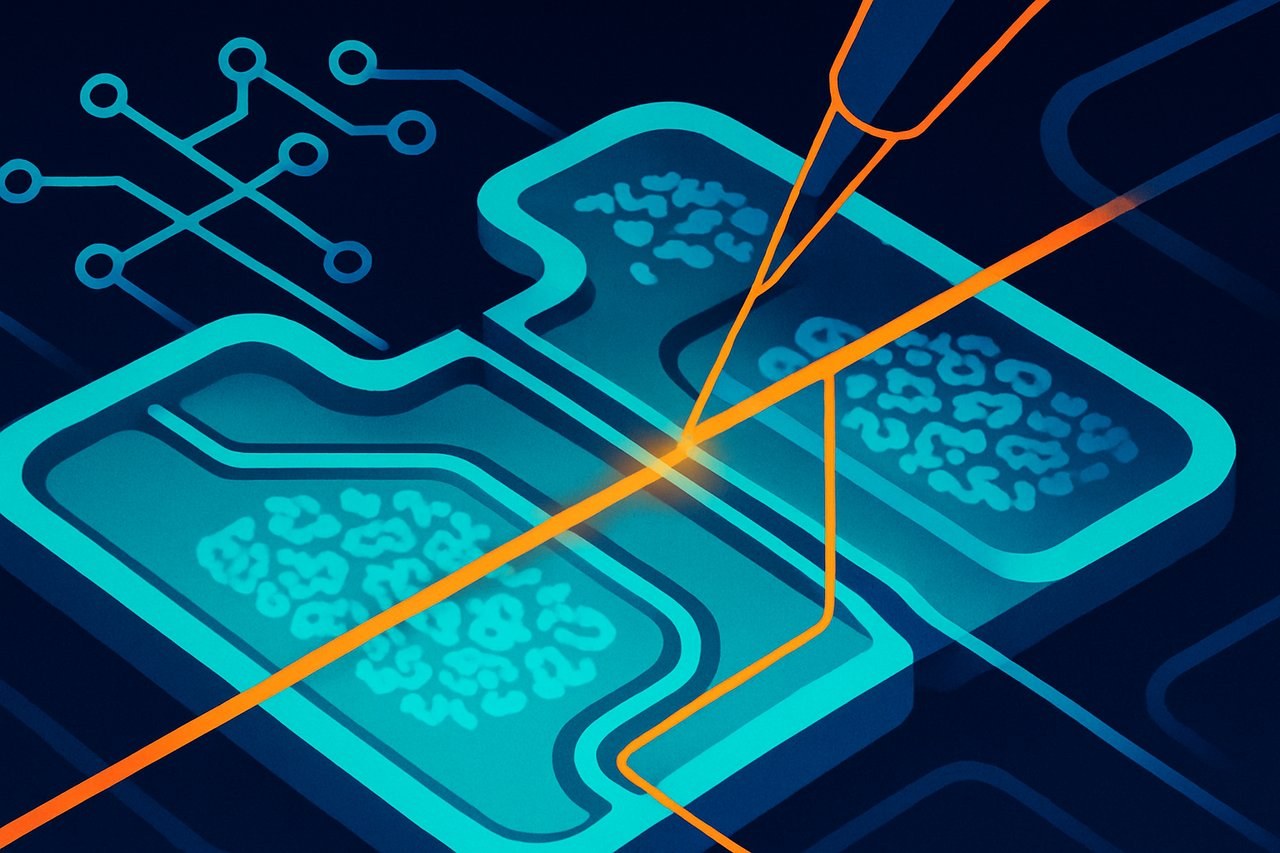
However, the real value of this development lies less in its algorithms and more in the technological bridge it builds between digital models and physical reality. To minimize the risk of model "hallucinations," researchers utilized patient-derived tumor explants (PDEs). Unlike oversimplified simulations, these living explants preserve the natural 3-D geometry and biological properties of patient tissues. This allows scientists to verify AI predictions in conditions that closely mimic reality before launching expensive clinical trials.
As a proof of concept, MIDAS identified the OSM–OSMR (Oncostatin M – Oncostatin M receptor) signaling pathway as a priority therapeutic target. When tested on melanoma tissue samples from the TRACERx project, the team observed a tangible reduction in dysfunctional immune cells. A theoretical hypothesis was thus transformed into a proven biological mechanism: the OSM–OSMR axis indeed suppresses the immune response. The neural network successfully filtered out overrated targets to highlight promising candidates that were previously overlooked.
For R&D leaders, the signal is clear: precision medicine is evolving from a marketing buzzword into a rigorous engineering discipline. The primary obstacle in drug discovery is no longer a data deficit, but a lack of high-fidelity environments for validation. Organizations that continue to test complex 3-D hypotheses on flat cell models risk massive financial losses. Shifting to a "validation-first" strategy using living tissues is becoming a prerequisite for survival in an industry where the price of error reaches billions of dollars.